
A Closer Look at Fluoride Levels in Saskatoon's Water Supply
Graduate student Esha Saleem examines how fluoride levels vary across the City of Saskatoon and why it matters for dental health.
Most Saskatoon residents likely don't think much about what's in their tap water beyond taste or clarity. Yet one small mineral - fluoride - quietly supports oral health every day. By strengthening tooth enamel, fluoride helps guard against decay, one of the most common oral health concerns worldwide.
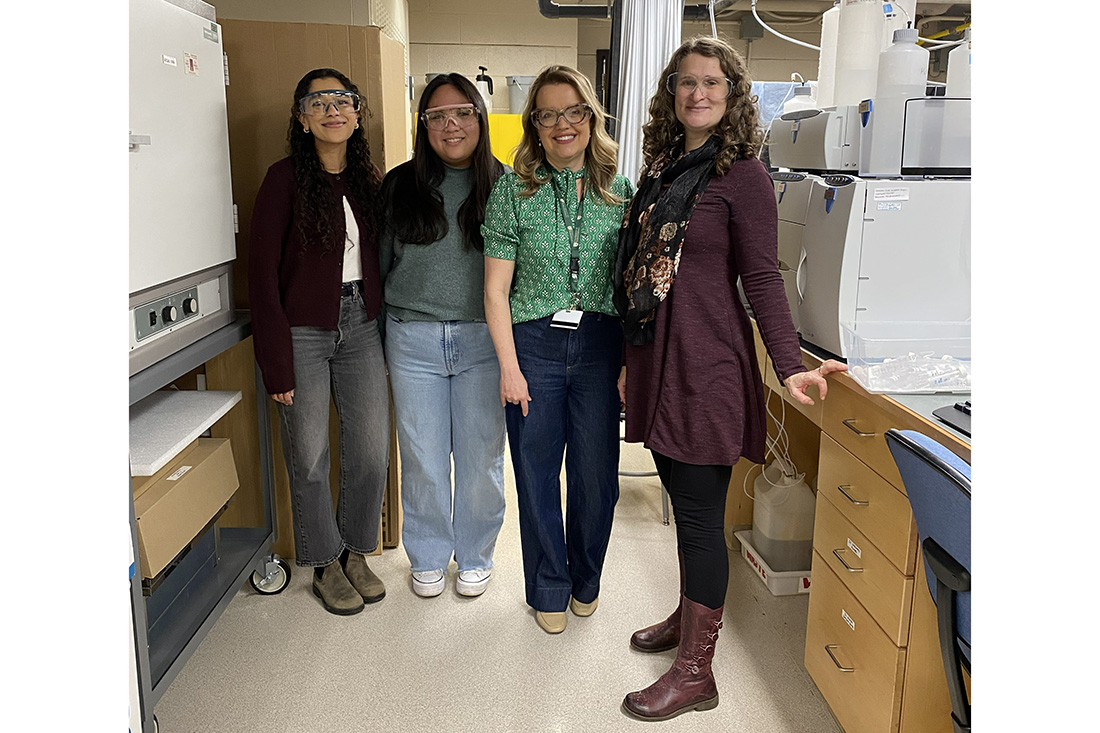
Esha Saleem, a graduate student in the Master of Public Health program at the University of Saskatchewan, set out to take an initial look at whether fluoride levels were maintained across Saskatoon and fall within Health Canada's recommended range (0.7–1.5 mg/L). Under the supervision of Juliana Faquim and Michelle Siqueira from the College of Dentistry, Saleem collected water samples from nine locations throughout the city to measure fluoride concentrations. Her project offers early insights into how fluoride levels compare across Saskatoon and helps build a clearer picture of the mineral's role in everyday dental health.
This project complements the City of Saskatoon's established practices for fluoridating and monitoring the municipal water supply. The Saskatoon Water Treatment Plant (WTP) adds sodium silica fluoride to increase the natural levels of fluoride in the South Saskatchewan from 0.2mg/L to 0.7mg/L. The addition of fluoride is a public health initiative that has been supported by City Council since the 1950's. Water quality is continuously monitored by the CALA-accredited lab to ensure water quality is safe for human consumption, including fluoridation. The Water Security Agency (provincial regulator) also closely monitors the performance of all water quality parameters at the WTP including fluoride.
To learn more, we asked Esha Saleem five questions to share what her research revealed.
1. What drew you to this project, and why did you choose to study fluoride levels in Saskatoon's water?
Oral health is often overlooked in population health, even though dental caries are the most common chronic condition worldwide. I was drawn to this project because I was interested in how something simple like community water fluoridation can improve oral health outcomes at the population level, regardless of an individual's income, insurance, or access to dental services.
Saskatoon was the perfect place to study fluoride levels because the city has been fluoridating its water supply since the 1950s, which makes it a long-standing public health initiative. While fluoride levels are measured at the water treatment plant, external monitoring provides complementary validation of the system. This approach reinforces transparency and aligns with the principle that public health strategies benefit from independent oversight to ensure quality, safety, and public trust. Studying this gap allowed us to determine whether the system is working as it is intended to across different areas of the city.
2. How does fluoride protect our teeth and why is it important to maintain the right levels in drinking water?
Fluoride is a naturally found mineral that strengthens tooth enamel, which is the hard outer layer of the teeth, making it more resistant to decay. It works both before teeth develop by supporting the development of enamel, and after teeth have erupted, by repairing early damage caused by acids from bacteria.
Maintaining the correct levels in drinking water is essential because if levels are too low, fluoride may not provide optimal protection against cavities. If levels are too high, over time, it can increase the risk of dental fluorosis, a condition that can cause mild discoloration of the teeth. Therefore, ensuring levels are within the recommended range helps communities receive the full preventive benefits while minimizing risk.

3. How did you go about deciding where to collect and testing water samples around the city?
We began by categorizing areas of the city based on their distance from the water treatment plant (near, intermediate, distant), which is located in the south-west region. Within each area, we intentionally looked for publicly accessible locations with drinking fountains, taps, or bottle filling stations. This meant that we excluded places such as gyms, restaurants, golf courses, or other facilities requiring payment or permission. After visiting the potential sites in person, three locations in each area were confirmed, resulting in nine sampling locations across the city.
4. What did the results of your samples convey about the fluoride levels in Saskatoon?
Our results showed that the majority of samples were slightly below the recommended target of 0.7 mg/L, with a citywide average of 0.66 mg/L. We also saw a spatial pattern, with average fluoride concentrations being the highest at locations closest to the treatment plant and gradually decreasing with distance. Overall, fluoride levels in Saskatoon are near the recommended level for optimal oral health, however, the variability observed emphasizes the importance of monitoring fluoride not only at the treatment plant, but also throughout the city to ensure consistent and equitable exposure for all residents.
5. What would the next steps be to follow up from these results?
Moving forward, continued external monitoring is important to map and track fluoride levels across different areas of the city over time. As fluoride levels are adjusted within the water supply system, findings from this research can provide supportive data to inform calibration processes and help maintain optimal concentrations. In this way, external monitoring complements operational control, strengthens public health protection, and helps ensure equitable access to the benefits of community water fluoridation.
Esha recently presented her research at the School of Public Health Student Research Conference 2025 and received first place for her poster. You can view it here.