
GIWS Lead:
Dr. Grant Ferguson
School of Environment and Sustainability
& Department of Civil, Geological, and Environmental Engineering
University of Saskatchewan (USask)
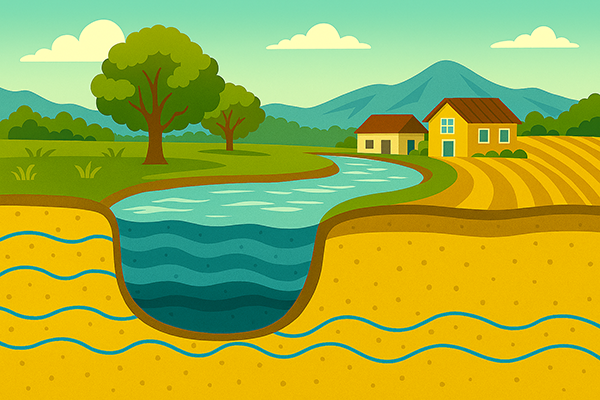
Groundwater is a critical resource facing pressing and increasing demand—in Saskatchewan, in Canada, and around the world. Changing precipitation patterns and shifting geopolitics translate into growing water demands for domestic use as well as economic activities will continue to put pressure on groundwater resources requiring sustainable management approaches. In Saskatchewan – and Canada – agriculture, critical minerals, and energy have been identified as key economic expansion sectors that will require increasing use of groundwater resources. Approaches to sustainable management of groundwater resources have evolved in recent years, but anticipated economic growth will require new approaches to characterization of groundwater systems, understanding threats to recharge, and equitable allocation, along with updated policy and governance strategies.
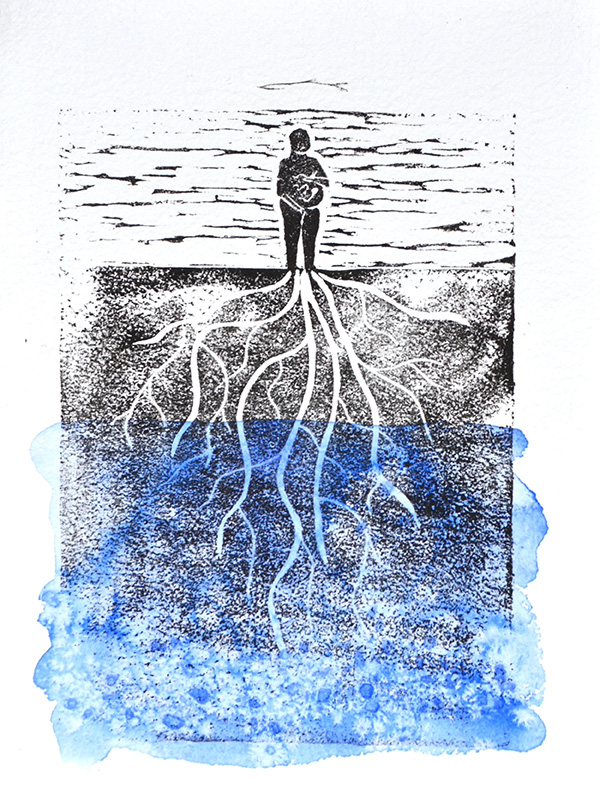
- Louise Arnal
from Deep Time
Virtual Water Gallery
Saskatchewan is semi-arid in some parts of the province with low groundwater recharge rates. Saskatchewan is also home to some of the world’s largest deposits of critical minerals, represents over 40% of Canada’s cultivated land area (including a core region for canola production used as seed oil and biofuel globally), and has significant oil, gas, and uranium deposits. Understanding groundwater in Saskatchewan is challenging – Saskatchewan has a unique hydrogeology shaped by numerous glaciations. As a result, many aquifers are fragmented and all are susceptible to natural and anthropogenic contamination. A future that includes widespread groundwater withdrawals could have large impacts on surface waters, soils, and aquifer water quality through additional contamination. Saskatchewan is also 80% rural, with at least 170,000 people relying on private wells. This positions Saskatchewan as an ideal living laboratory, representing many facets of groundwater resources, demands, and vulnerabilities relevant to Canada and the rest of the world.
However, Canadian universities are at a unique point in time where, despite increasing demand for groundwater use, academic research and training specifically focused on groundwater resources and sustainability has been in decline. Universities have struggled to sustain groundwater focused programs as senior faculty retire. USask is uniquely positioned to grow their leadership in this area. In addition to strong partnerships across multiple levels of government as well as the mining, nuclear, and agriculture sectors and multinational corporations, USask has a rich history in groundwater research and teaching that started over a century ago when the university was first established. Dr. John Cherry, whose immense impact on groundwater science was recognized by the 2020 Stockholm Water Prize, is a University of Saskatchewan alum. This legacy continues through our leading-edge faculty.
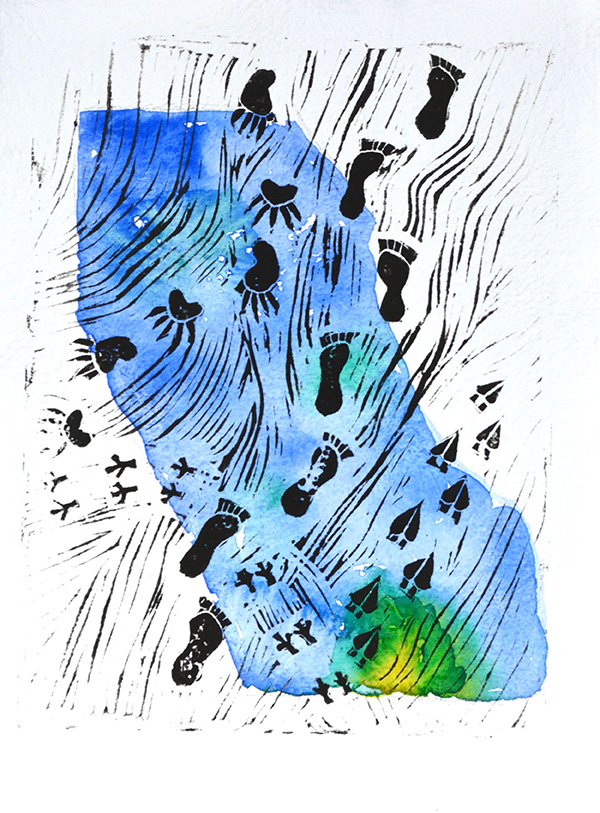
- Louise Arnal
from Deep Time
Virtual Water Gallery
Saskatchewan is a resource economy – resources that the rest of the country and the world depend on. This is especially true given Saskatchewan’s significant critical mineral endowment and a recent decision to establish the first N. American Rare Earth Processing Facility in Saskatoon. Premier Scott Moe has committed to responsible resource production in the province. Given the large associated water demands, much of which will continue or expand to be met through groundwater use, a commitment to responsible resource production requires a commitment to sustainable groundwater use that is fit for purpose.
Fit for purpose is an important consideration. Groundwater quality is highly variable, especially across Saskatchewan. Oil and gas and potash mining companies need large volumes of reliable water supplies for extraction and processing. Quality is less important during operations, but contamination mitigation strategies are critical for aquifer sustainability. Groundwater quality matters for agricultural production and as weather patterns become more volatile, groundwater can provide a more sustainable resource for both irrigation and animal production as long as its chemistry is suitable for crop and livestock survival.
With agriculture needs evolving, advances being made in geothermal and nuclear applications, and increased mining activity on the horizon – research is desperately needed to protect and manage groundwater given these competing interests to ensure sustainability. Significant financial investment in infrastructure is required for growth in these sectors and reliable water supplies are an important risk exposure. Mitigating this requires investment in research and training. There is a need for development and application of novel tools and approaches to groundwater characterization that bridge physical and social sciences. Opportunities exist through geophysical, isotopic, and field methods, hydrogeological modeling advances harnessing AI, coupled with advances in social system modeling through agent-based models and large language models. Collectively, these advances can generate pathways for sustainable management of groundwater resources through collaborations with partners in Saskatchewan and around the world. We need to be able to respond to emerging knowledge gaps, such as the complex interactions among groundwater, soil quality, and drainage, as well as to better understand and adapt tools to local contexts.
Improved understanding of groundwater systems would provide government and industry with a starting point for development and help to inform the environmental assessment process. Trained professionals will augment the workforce in the province and beyond, building a next generation of hydrogeologists with disciplinary expertise and an understanding of the interconnectedness between environment, society, and economy.
Goal
Building on our legacy, capacity, research infrastructure, and partnerships, the Groundwater Sustainability Hub provides a co-ordination and leadership mechanism to collectively:
- Advance our knowledge of groundwater in Saskatchewan
- Work with industry to understand sector needs, challenges, and threats
- Identify strategies and develop tools for sustainable groundwater development and management
- Collaborate across Canada and around the world to share knowledge and apply findings across different contexts
- Build a cohort of professionals to respond to current and future workforce needs
- Expand instrumented sites to:
(i) monitor changes in groundwater supply/quality;
(ii) parameterize / calibrate groundwater models;
(iii) ground truth remote sensing/geophysical data; and
(iv) train groundwater scientists and engineers
Members
Dr. Grant Ferguson
Professor, Geological Engineering, College of Engineering
- Member of GIWS
- 2025 National Groundwater Association Darcy Lecturer
- International Association of Hydrogeologists Vice-President North America
- Focus: Groundwater and the energy industry, the hydrogeology of the Canadian Prairies and sustainable development of groundwater.
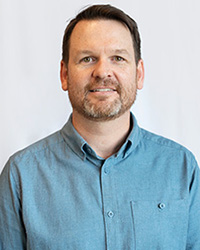
Dr. Matthew Lindsay
Professor, Geological Sciences, College of Arts and Sciences
- Member of GIWS
- Focus: Groundwater geochemistry, mine closure geochemistry, and metal-mineral-water interactions.

Dr. Laura Smith
Assistant Professor, Civil, Geological and Environmental Engineering, College of Engineering
- Focus: Hydrogeochemistry and engineering geology.

Dr. Andrew Ireson
Professor, School of Environment and Sustainability
- Member of GIWS
- Focus: Subsurface hydrology, frozen soils, cold regions hydrological processes, climate change and water security.
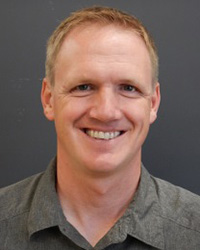
Dr. Warren Helgason
Professor, Civil, Geological and Environmental Engineering, College of Engineering
- Member of GIWS.
- Focus: Energy and mass transport (including water) in the soil-plant-atmosphere continuum, irrigation.

Dr. John Gibson
GIWS Senior Research Scholar and Principal Researcher, Alberta InnoTech.
- Focus: Isotope hydrology, geochemistry, and source tracing.
Research Supports and Infrastructure
Analytical Geochemistry Laboratory (Geological Sciences) – specializes in the quantitative chemical analysis of fresh surface waters and groundwaters, and water impacted by natural process and anthropogenic activities
Saskatchewan Isotope Laboratory (Geological Sciences) – specializes in “non-traditional” stable isotopes including Ca, Mg, Sr, U, that can be valuable tracers of water-rock interactions in groundwater systems
Stable Isotope Lab (Soil Sciences) – specializes in stable isotopes of water, including extraction from soils
Canadian Light Source – synchrotron beamlines specific to different parts of the light spectrum in support of spectroscopy, diffraction, and nano-macro scale imaging
Global Institute for Water Security – a variety of research supports including field support (trucks, skidoos, ATV, trailers, technicians) and post-grant award support including project and financial management, knowledge mobilization, and digital and web services as well as partner in and secretariat host for the Global Water Futures Observatories freshwater facility
The Sylvia Fedoruk Canadian Centre for Nuclear Innovation – Supporting Saskatchewan through advances in nuclear science, nuclear technologies, and nuclear policies to be a national and international participant in nuclear science, technology deployment and policy development
Global Institute for Energy, Minerals and Society (GIEMS) – Supporting innovation, research, and training, towards the global energy transition by connecting academia, industry, and government
Partners

(Header image generated by Microsoft Copilot)